
The water treatment industry has a monumental responsibility to provide pure resources for industry professionals. It keeps their operations safe and ensures the products they manufacture are the highest quality possible.
Over the years, the sector has employed various techniques to identify, isolate and eliminate unwanted inclusions, with new ideas being researched nearly constantly. Discover how water treatment plants test for contaminants, and why reliability and trust are so vital.
How Water Treatment Facilities Find Contaminants
These strategies have been developed over the decades to uncover the contaminant composition in water, with each offering its unique advantages and specialty use cases.
Microbiological Testing
This method is among the most crucial, as it detects bacteria and other microorganisms that could be harmful in drinking water. The presence of microorganisms can also be harmful if used on equipment or intended for steam generation, as it can damage infrastructure or spread contaminants further.
Professionals use membrane filtration to catch contaminants as they pass through a film. It can capture some of the most hazardous colonies, including E. coli. When used alongside multiple-tube fermentation, it can approximate the density of each bacterium. Polymerase chain reaction and adenosine triphosphate monitoring are several newer methods that provide more rapid results. These track bacterial DNA, potentially identifying more activity and varieties in a water sample.
Physical Testing Methods
Water treatment experts use many tools to notice unusual activity, as it can indicate the presence of contaminants. For example, electrochemical probes can spot when water is too acidic or alkaline, which could be the perfect environment for some pollutants. Turbidity is another essential metric. If the water is not clear, it could indicate difficulty as it passes through filters and other membranes, and a nephelometer can help quantify this.
Finally, aesthetics are heavily considered. Visual inspections of the water’s color can reveal what pollutants it contains. Flavor profile analysis is another strategy that evaluates the water’s smell and taste.
Chemical Testing for Organic Contaminants
The catalog of organic contaminants in water can be extensive, including solvents, medicines and cleaning products. The sheer diversity of these requires experts to use multiple methods to find them all, though some contaminants may still go undetected. Novel contaminants emerge regularly, with per- and polyfluoroalkyl substances among the most prominent modern concerns.
Professionals use several forms of chromatography to test for contaminants. First, a gas-based method uses a mass spectrometer to detect pollutants, such as volatile organic compounds, by physically separating them using a gas like helium. Liquid-based testing can detect organic compounds such as pesticides and personal care products by performing the same separation using a liquid mobile phase.
Chemical Testing for Inorganic Contaminants
For pollutants like solid plastics, metals and minerals, water treatment professionals need to take a different approach. They can still use mass spectrometry to find contaminants, but they also use other methods to spot various elements, including mercury, arsenic and lead, and ions like fluoride and nitrites. These methods include:
- Inductively coupled plasma
- Atomic absorption spectroscopy
- Optical emission spectrometry
- Ion chromatography
The combination of these devices and techniques can accurately locate extremely small traces of these inclusions.
How Experts Determine a Test’s Efficiency and Usefulness
It is a water facility’s job to determine the most appropriate time to use each treatment method, as every sample could contain different compounds. These characteristics inform their decision-making. These criteria create the methodology for how experts pick testing methods, tools and suppliers.
Accuracy
The validity of each testing method has changed drastically over the years, especially as devices become more powerful and precise. The workforce will choose the strategy with the highest accuracy for detecting any given contaminant, as detecting even the smallest pollutant at parts per million may indicate a larger problem. Additionally, avoiding false positives and negatives is critical to protecting the public, as both can lead to costly and harmful consequences.
Reliability
A tester will only use a known and consistent evaluation method. It needs to correctly identify contaminants in multiple scenarios, which instills confidence in teams. They need to know there will not be significant deviations from expectations or fluctuations that could compromise data integrity. Meters need to give dependable readings, or the method is useless.
Speed of Results
If teams can test for contaminants more quickly, they can allocate resources more efficiently. It also prevents hazardous materials or bacterial colonies from multiplying, making conditions more unsafe. From an operational perspective, this can complicate and extend the treatment process, leading to public health concerns like the spread of illness or water scarcity.
Types of Contaminants Detected
No single testing method can detect every contaminant, but more versatile methods are desirable because they are more efficient. The device and test also need to accurately determine the scope of the contamination. This is why some plants use targeted analysis based on their constituency and clientele. For example, plants near agricultural operations are more likely to spend more time finding herbicides than those near metropolitan areas.
Compliance With Regulations
Adherence to regulatory frameworks is nonnegotiable. It keeps water treatment plants in good standing and out of legal trouble. Organizations like the Environmental Protection Agency provide guidelines for how water treatment facilities must operate and for executing each testing type to achieve the best results.
Cost-Effectiveness
Utility companies also need to consider budgets, as some testing methods are more expensive than others. Despite their accuracy or reliability, sometimes using one strategy over another is unjustifiable due to limited financial resources. The monetary value of every test also includes:
- Labor
- Electricity
- Equipment maintenance
- Contracts
- Reagents
- Training
- Auditing
Ease of Use
Some testing methods require more expertise to perform than others, so a more accessible technique may be ideal for less-experienced staff. These are also ideal in laboratory environments, where data collection is the priority. Strategies involving easy-to-use handheld meters or test kits are simpler than those that require an advanced chemistry background to deploy.
Why the Industry Struggles to Treat All Types of Contaminants
Facilities partner with water treatment experts because they regularly face several pain points. Fortunately, each obstacle is surmountable with transparent collaboration and advanced tools.
Lack of Understanding of Water Safety Procedures
Everyone contributes to water quality, including policymakers, homeowners and businesses. Many need more awareness of how much goes into making safe drinking water, as they would take greater care with how they interact with local water. It would reduce the depth of testing that plants would need to do.
To overcome this, publishing available consumer confidence reports can educate the public. Additionally, following standard operating procedures for every test can establish good habits among staff, helping improve their understanding.
Concern About the Quality of Public Drinking Water
Several news incidents in the last several years have made the public more anxious about the safety of local water. Plants can use every testing method in their arsenal, but they may need to do more to instill faith in their constituents. Publicizing efforts to address high-profile threats, such as microplastics and biological contaminants, helps everyone understand that the facility is aware of the contaminants on most people’s minds.
Need to Ensure Compliance With Environmental Regulations
Local, state and federal regulations are a complex yet navigable web of rules that every facility needs to prioritize. The Safe Drinking Water Act is the most prominent example. Teams can have dedicated compliance consultants, whose job is to remain on top of regulatory changes and help teams obtain certifications. They also reinforce behaviors such as record-keeping and procuring compliance-approved materials and tools.
Difficulty in Selecting the Correct Testing Equipment and Methods
Workforces have a plethora of tools to choose from, and utility managers and engineers could feel decision fatigue every shift. The decision has extremely high gravity, as the wrong selection can cost millions and further spread contaminants. Creating rules-based processes for technicians is the best way to reinforce consistency and quality.
Real-time process controls make teams faster and reduce the mental burden of choosing the right test. Labs can also implement additional testing methods, like microbiological plating, as a supplement to gain deeper insights.
The Top Companies for Water Treatment and Contaminant Testing Supplies
Facilities must develop a long-standing partnership with a reliable company to obtain essential, high-quality testing materials, such as EPA-approved kits, lead-detection equipment, reagents, meters and more. These are the best options in the industry, given the accessibility of their quotes, competitive pricing, custom solutions and industry standing.
1. AquaPhoenix Scientific
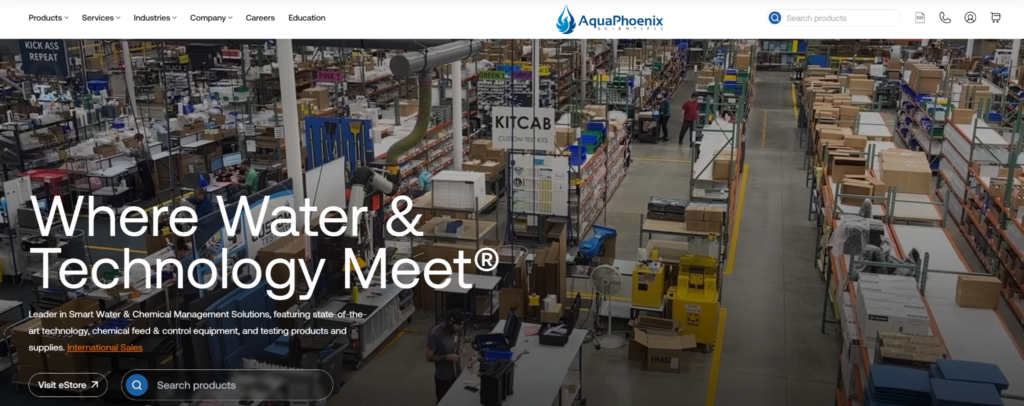
AquaPhoenix Scientific is a manufacturer and distributor of water-testing products, known for exceeding customer expectations and offering some of the fastest response times in the sector. It is a single source for a vast catalog of testing supplies from the most reputable names, including Hach, Thermo, Palintest, Hygenia and many others. Based on the client’s needs, the team can recommend the best products to test for every unique circumstance.
Every account receives unprecedented attention and dedication, with its expert team providing everything from free private labeling to product customization. AquaPhoenix Scientific ensures clients receive every service they need, while innovating the industry with its proprietary EndPoint ID Test Kits. They are affordable and easy to use, using clear instructions so anyone can employ them. With a multitude of training videos and years of team experience, every product is sure to test for contaminants confidently. Its offerings include:
- Testing supplies, like benchtop meters and custom test kits
- Feed and control equipment, like containment tanks and pumps
- Software and technology solutions
- Educational resources
2. Taylor Technologies
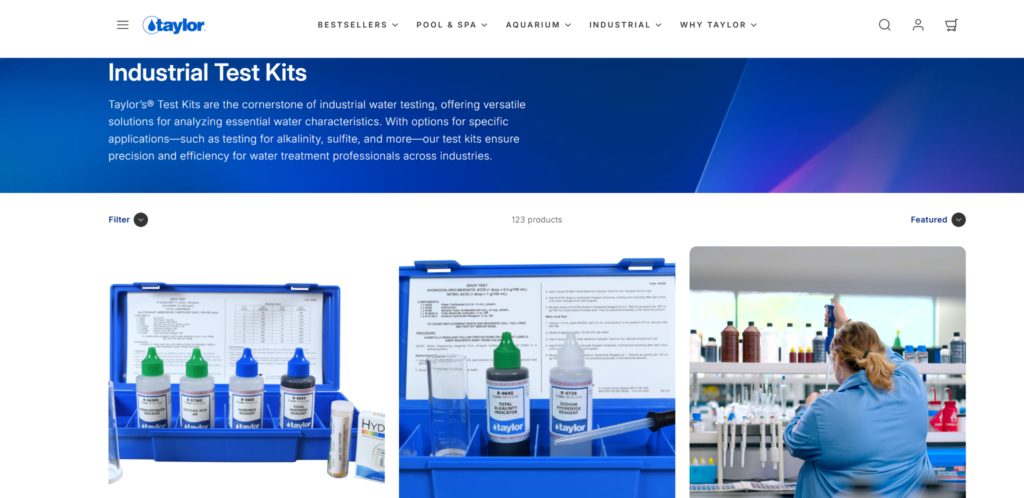
Taylor Technologies is a leader in industrial water testing, providing a range of tools and test kits to identify diverse contaminants and assess sample characteristics, including turbidity and acidity. Because of its dedicated focus on industrial solutions, its products can handle the scale and intensity that home-use products cannot meet. Its product lineup includes:
- Drop tests
- Colorimeter reagents
- Warewashing kits
- Conductivity and salinity meters
- pH testers
3. US Water Systems
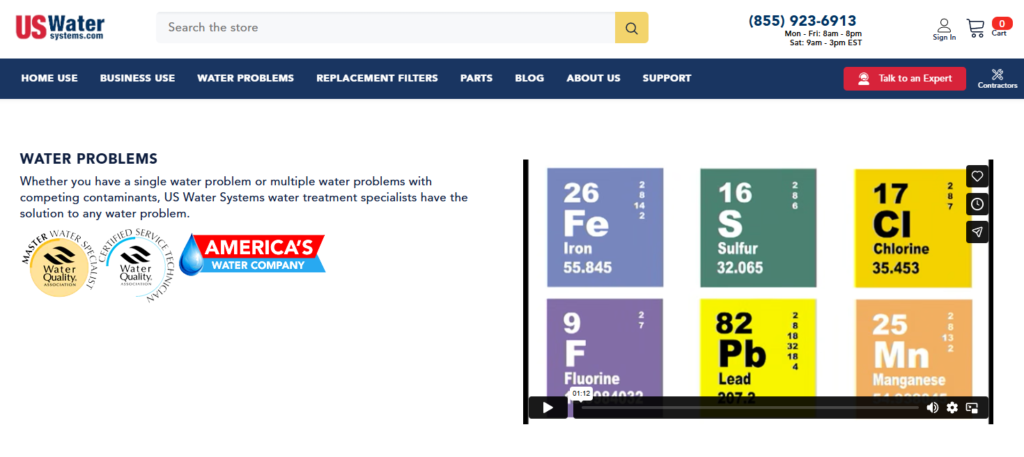
US Water Systems is a big name in the commercial water testing space, known for its filtration systems and testing devices. Its library of resources is nearly unmatched, providing every customer with detailed information on many contaminants. Its products are filtered by issue, allowing companies to shop by their pain points rather than a more generalized search. Its catalog is able to handle the following contaminants, including but not limited to:
- Acid water
- Bacteria and virus
- Chlorine
- Fluoride
- Methane
- PFOA
- Radioactive materials
- Radon
- Sediment and silt
- Tannins
Distributors at a Glance
Here are each provider, with their outstanding offerings and years of experience, for comparison.
| Company | Year Established | Unique Value Proposition |
| AquaPhoenix Scientific | 2003 | Rapid service and personalization with smart water management solutions |
| Taylor Technologies | 1930 | Accurate and easy-to-train testing kits |
| US Water Systems | 2002 | American-made, filtration-focused tools targeting specific contaminants |
FAQ About Water Treatment and How to Test for Contaminants
These are the most common questions from water treatment professionals, and the answers will help everyone determine the tools they need.
What are the four types of water contaminants?
While the categorization of each contaminant may vary across businesses, the most prominent are physical, biological, radiological and chemical.
What are five substances that can contaminate water?
There are more than five contaminants and pollutants, though some are more present than others. This depends heavily on the region, as a city near a nuclear facility will face unique problems compared to communities near agricultural areas. However, some of the most prevalent and concerning issues could include:
- Nitrogen
- Salts
- Bleach
- Metals
- Bacteria-produced toxins
How do factories cause water pollution?
The ways other businesses create contaminants in water are one of the primary concerns of treatment plants. They need to know how their practices harm waterways, because this informs the strategies they use for treatment. They cause pollution in many ways, including:
- Improper waste disposal
- Fossil fuel overuse
- Using hazardous ingredients in production
- Thermal pollution
- Accidental leaks
The Value of High-Quality Testing Products
Every team deserves the peace of mind to trust their water testing instruments. Knowing they can find and identify any contaminant allows the industry to find better ways at isoalting and treating them. While the chemistry is similar across techniques, the accuracy, durability and validity of every tool and kit cannot be understated. Partnering with the right distributor will set facilities up for long-term success and scalability.